Translate
Qt Linguist.ts Files
Upload your Qt Linguist .ts source files, translate messages by context, and export a file lrelease compiles without changes.
<?xml version="1.0" encoding="utf-8"?>
<!DOCTYPE TS>
<TS version="2.1" language="pl">
    <context>
        <name>AboutPage</name>
        <message>
            <source>Author</source>
            <translation>Autor</translation>
        </message>
    </context>
</TS>
The .ts you're thinking of
is not this one
Qt Linguist's translation source files also use the .ts extension, which has nothing to do with TypeScript. It is an XML format where every <message> sits inside a <context> block, usually named after the C++ class or QML component the string came from. Before an app ships, Qt's lrelease tool compiles the file into a binary .qm file that the runtime actually loads.
Plural forms use numerusform entries built around a %n placeholder, and how many variants a language needs depends on that language's own grammar rather than a fixed count. On import, SimpleLocalize turns those variants into one translation key in ICU message syntax, so all plural forms for a string are edited together.
{COUNT, plural,
  one {Znaleziono %n plik}
  few {Znaleziono %n pliki}
  other {Znaleziono %n plików}
}
Source, not the compiled output
What .ts holds, and what stays with lrelease
Contexts group messages
Each context block usually names the class or QML component a string belongs to.
Source, not compiled
A .ts file is the editable XML source. lrelease compiles it into the binary .qm your app loads.
Variable plural counts
The number of numerusform variants per message depends on the target language's grammar.
End-to-end workflow
Translate a Qt Linguist file end to end
Upload a neutral translations_en.ts file, translate messages while keeping the original context and comments, and export one file per language, ready to compile with lrelease.
simplelocalize upload \
  --apiKey PROJECT_API_KEY \
  --uploadFormat qt-linguist \
  --uploadLanguageKey en \
  --uploadPath ./translations_en.ts
Upload your source .ts file
1.ts file and upload it. Messages import grouped by their original context.AboutPage
Author
Version
Found %n files
SettingsPage
LanguageContexts show up as namespaces
2AboutPage and SettingsPage messages stay grouped exactly as they were in the original .ts file, so translators keep the same mental map.one: Znaleziono %n plik
few: Znaleziono %n pliki
many: Znaleziono %n plików
other: Znaleziono %n plikuAuto-translate plurals in one pass
3numerusform variant translates together as a single ICU-format key, so a translator never sees a plural form out of context from the others.simplelocalize download \
--apiKey PROJECT_API_KEY \
--downloadFormat qt-linguist \
--downloadPath ./translations_{lang}.ts
lrelease translations_pl.tsDownload and run lrelease
4.qm file the same way you always have.For developers
A localization platform,
that keeps context and plurals together
SimpleLocalize maps Qt Linguist's own structure onto concepts you already use in the editor.
Contexts become namespaces
Each context block is imported as a namespace, so messages stay grouped by the class or component they belong to.
Plurals as one key
All plural variants for a message are combined into a single translation key, instead of several disconnected strings.
AI auto-translation
Translate new and changed messages with DeepL, Google Translate, OpenAI, Claude or Gemini, grouped by their original context.
CLI and REST API
Upload and download translation sources from the CLI, or automate the same logic through the REST API.

More conversions
Convert Qt Linguist to other formats
Free online converter, no account required. Upload a .ts file and download it in the format you need.
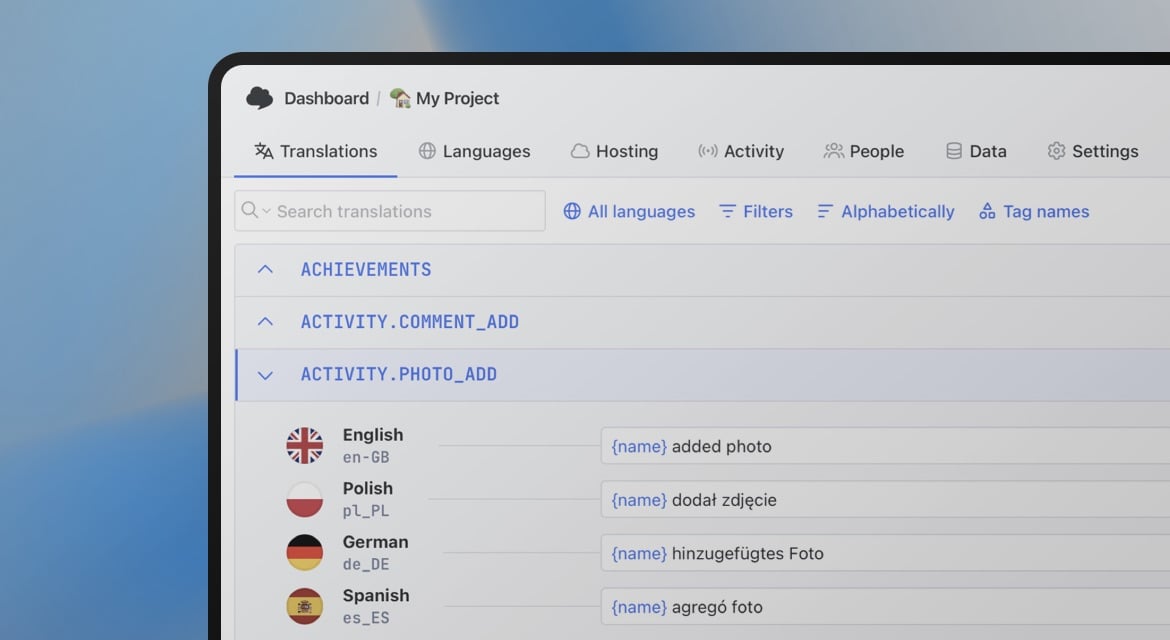
Start translating Qt Linguist files
- Contexts imported as namespaces
- Plural variants combined into one editable key
- Exports a source file ready for lrelease
"The product
and support
are fantastic."
"The support is
blazing fast,
thank you Jakub!"
"Interface that
makes any dev
feel at home!"
"Excellent app,
saves my time
and money"
Resources
More on localization workflows and translation file formats.
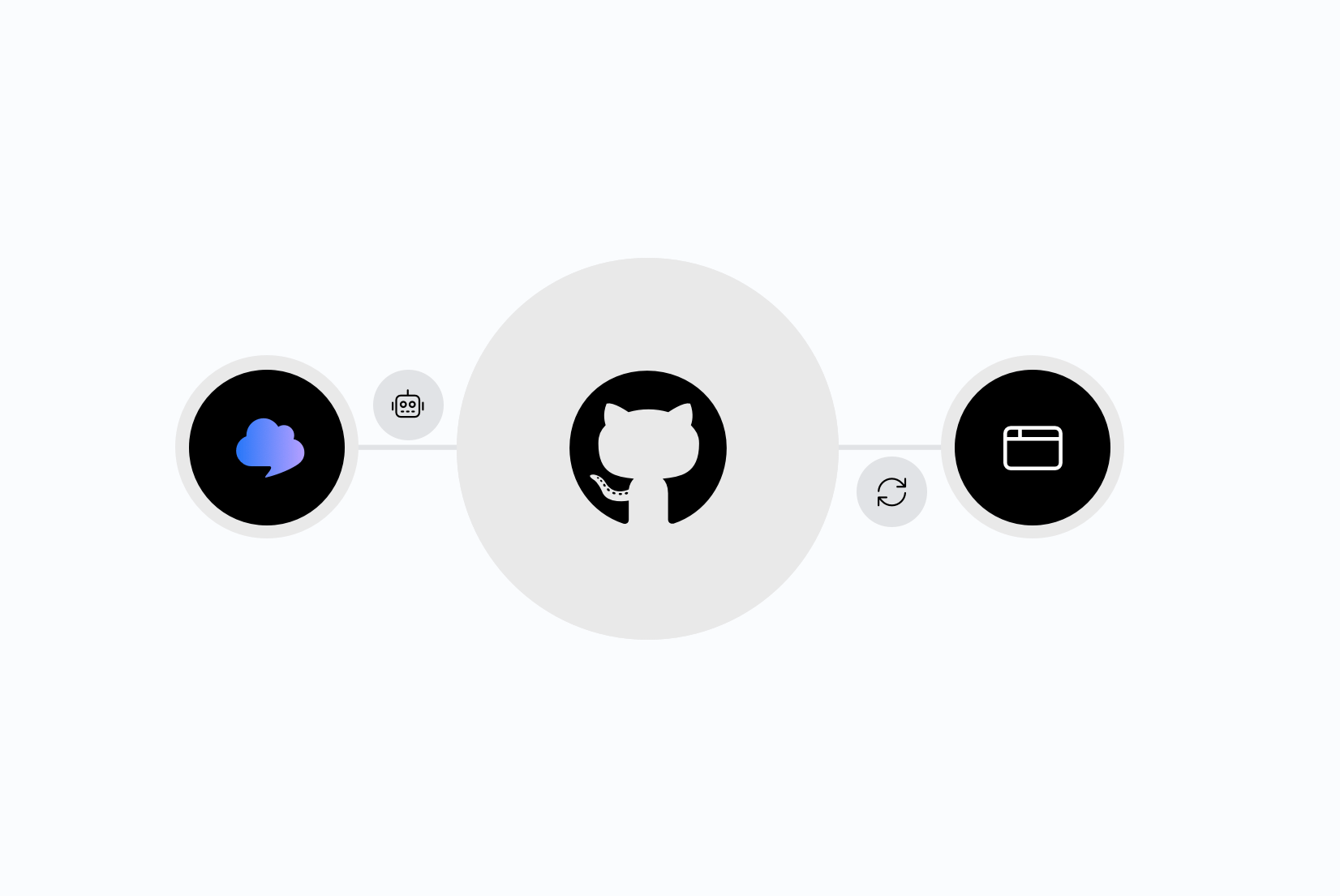
Integrating AI translation into your CI/CD pipeline
Stop treating translation as a manual step before release. Learn how to trigger AI translations automatically on every GitHub push, using SimpleLocalize CLI or the GitHub App.
Why machine translation breaks UI strings (and how to fix it)
Machine translation often breaks UI strings through missing context, character limits, and grammar rules other languages don't follow. Here's why, and how to fix it.

The role of context in AI translation: Why it matters and how to use it
Why context is the single biggest factor in AI translation quality, and how to structure project context, key descriptions, and glossaries for accurate results.
Frequently asked questions about Qt Linguist files
Is a Qt .ts file the same as a TypeScript file?
No. They share a file extension by coincidence. Qt Linguist's .ts is an XML translation source, unrelated to the TypeScript programming language.
Do I still need to run lrelease?
Yes. SimpleLocalize exports the XML translation source. Compiling it into a binary .qm file for your app still happens with lrelease as part of your normal build.
How are contexts handled?
Each <context> block is imported as a namespace in SimpleLocalize, so messages from the same class or QML component stay grouped together in the editor.
Are numerusform plurals supported?
Yes. Variants are combined into a single ICU-format translation key, with the correct number of forms per language.