Localization in e-commerce: A practical guide for growing online stores

Selling online makes it easy to reach customers anywhere. Convincing them to buy is harder. For many stores, the barrier is not price or product quality. It is language, local context, and trust, all of which directly affect conversion rates.
E-commerce localization helps remove those barriers by adapting your store to each market you serve.
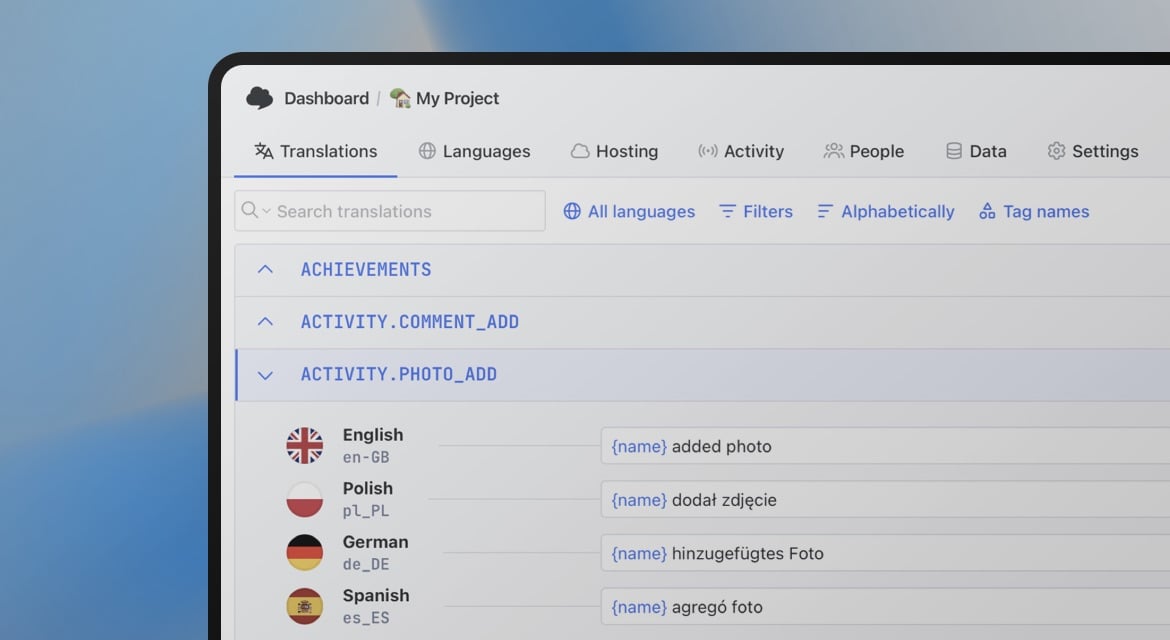
This article explains what localization in e-commerce really means, why it matters, and how to approach it in a practical way. It also shows how teams use SimpleLocalize with platforms like Shopify and Webflow to manage translations at scale.
What localization means in e-commerce
Localization is often confused with translation. Translation is part of it, but localization goes further.
In e-commerce, localization usually includes:
- Translating product names, descriptions, and categories
- Adapting marketing content, blog posts, and landing pages
- Handling currencies, units, and formatting
- Adjusting tone and terminology for local audiences
- Making sure navigation, filters, checkout flows, payment methods, and confirmation messages are understandable
A localized store feels natural to a customer in a given market. It does not feel like a foreign website that happens to be translated.

For example, a store selling outdoor gear might translate product descriptions into Spanish for the Mexican market. But localization would also involve adjusting the tone to be more casual, using local slang for outdoor activities, and showing prices in Mexican Pesos.
A common failure case is a checkout page that switches back to English, shows unfamiliar payment methods, or displays unclear error messages. Even motivated buyers abandon at this stage.
Learn more about what is localization and about the difference between translation and localization.
Why localization directly affects e-commerce results
Localization is not only about user experience; it directly impacts revenue and growth. Here are the main reasons:
-
Higher conversion rates
Customers are more likely to buy when product information is clear and written in their language. Even small uncertainties in wording can stop a purchase, especially for higher-priced items.
-
Better organic traffic
Search engines rank localized pages for local queries. A translated product page can attract traffic that an English-only page never will. Over time, this builds a wider and more stable traffic base.
-
Stronger brand trust
Language mistakes, missing translations, or mixed languages reduce credibility. Consistent localization shows that a store is serious about serving a market, not just testing it.
What should be localized in an online store
Not every store needs to localize everything at once. A good starting point is to focus on content that directly supports discovery and purchasing.
Product content
This includes:
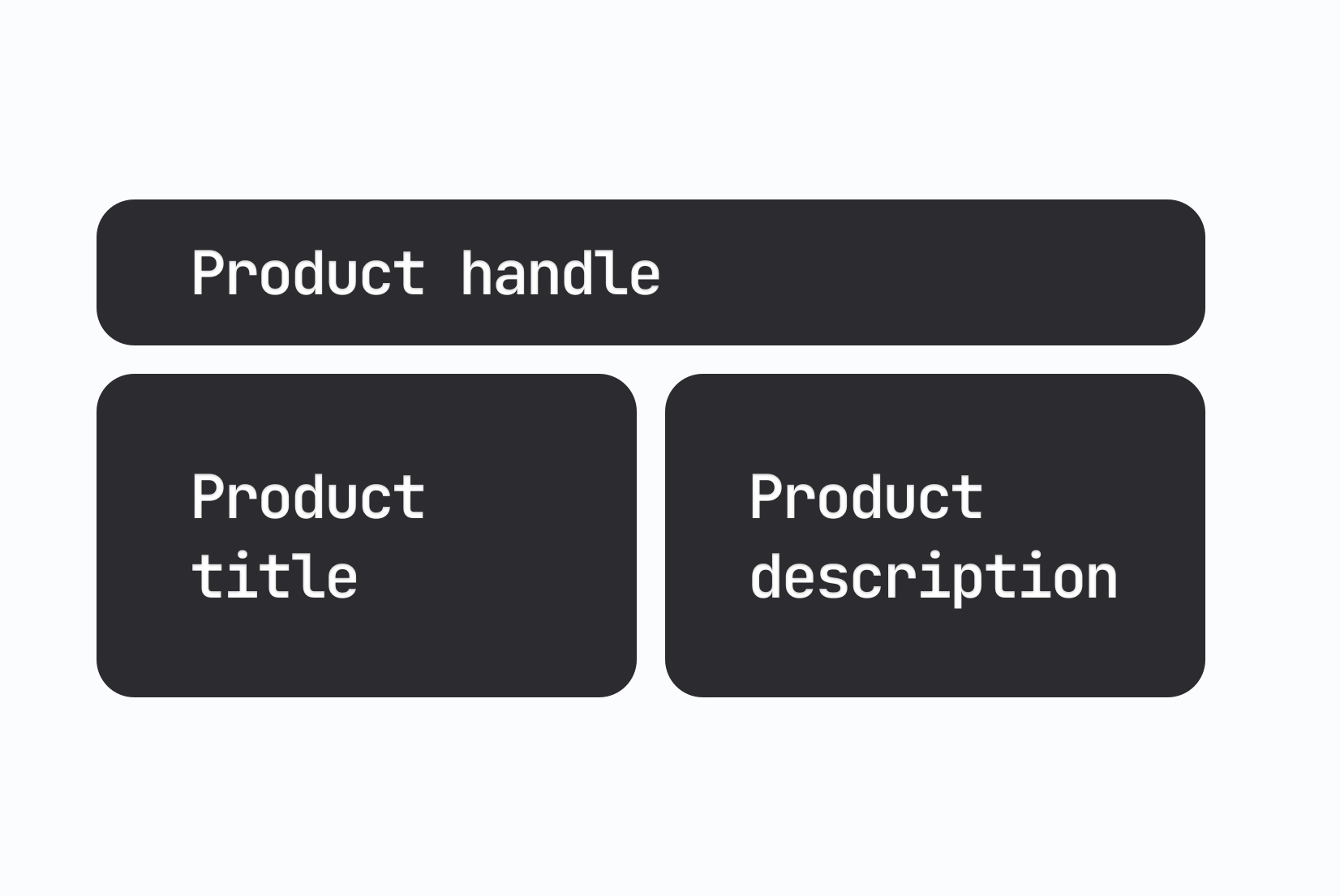
- Product titles
- Descriptions and specifications
- Variant names
- Meta titles and descriptions
- Reviews and review summaries (where applicable)
For Shopify stores, product translations are often the first step. This is covered in detail in the SimpleLocalize guide on managing Shopify product translations.

Navigation and system content
Menus, filters, buttons, and system messages are easy to overlook. Missing translations here create friction and confusion.

Blog and marketing pages
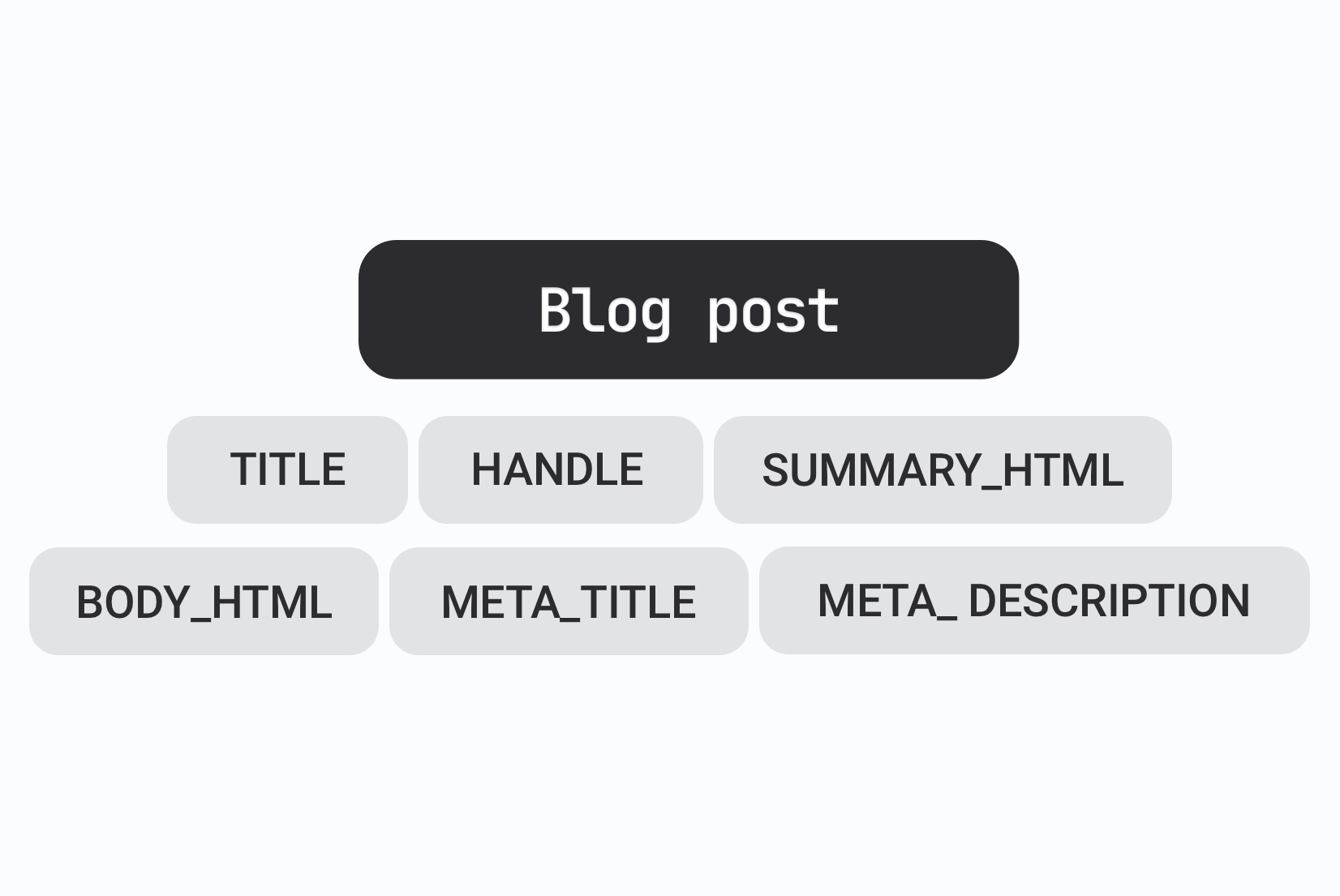
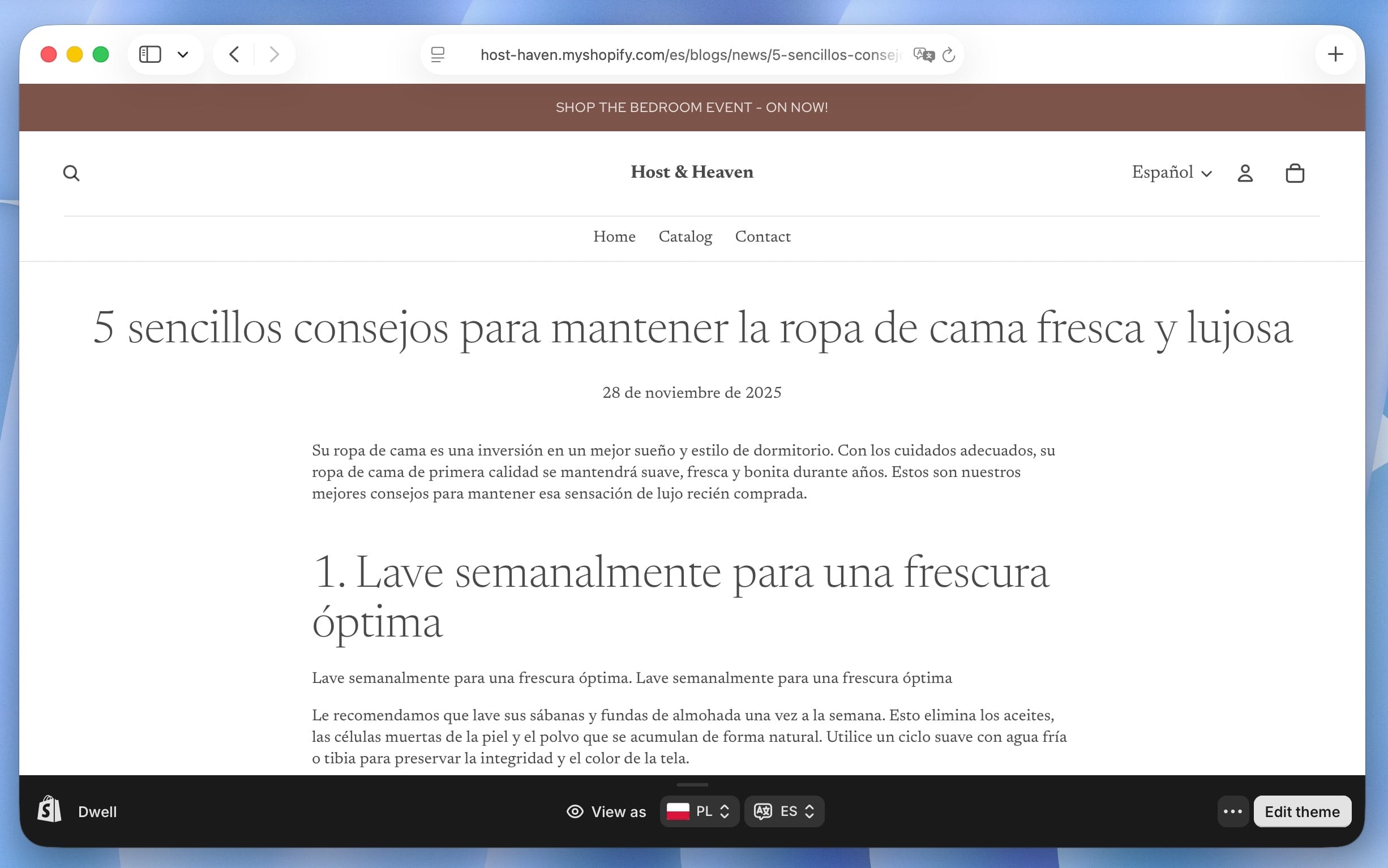
Localized blog posts help with SEO and provide value before a customer is ready to buy. Shopify merchants often localize blog content to support international search traffic and build brand awareness.
Landing pages, FAQs, and policy pages also play a role in building trust.
Learn more about how to localize Shopify blogs.
Legal & policy pages
Shipping, returns, and privacy policies are often trust blockers if not localized. Customers want to understand the terms before they commit to a purchase.
Common localization challenges in e-commerce
Many teams start localization with good intentions but struggle as the store grows.
-
Content changes frequently
Prices, product details, and promotions change often. Manual translation workflows do not scale well in this environment. Outdated translations also create SEO inconsistencies across languages.
-
Multiple platforms and content sources
It is common to use Shopify for the store, Webflow for marketing pages, and custom applications on top. Keeping translations in sync across systems is difficult without a central source of truth.
-
Developers and marketers work separately
Developers need structured content and stable keys. Marketing teams need an interface that allows fast updates without code changes. A good localization setup supports both.
How SimpleLocalize fits into e-commerce localization
SimpleLocalize is designed to manage translations as structured content, not static text files. This approach works well for stores with frequent updates and multiple integrations.
Shopify integration
With the Shopify integration, product content, collections, pages, and blogs can be translated and kept in sync. This includes product variants and structured content commonly used in Shopify stores.
Developers or store owners connect the store once, and translators or content editors work in SimpleLocalize. Updates are automatically reflected in Shopify without manual copy-paste.
Learn more about the Shopify integration and check the documentation.
Webflow integration
Webflow is often used for landing pages and brand-focused content. Localizing this content helps align marketing pages with the store experience. This is especially useful for SEO-focused landing pages and campaigns.
SimpleLocalize integrates with Webflow CMS, allowing teams to translate collections and static content while keeping the original structure intact.
Learn more about the Webflow integration and check the documentation.
A practical localization workflow
A sustainable localization setup usually follows these steps:
-
Define target markets and languages
Start with markets that already show demand or traffic. Focus on one or two languages to begin with.
-
Centralize translatable content
Use a localization platform like SimpleLocalize to manage all languages in one place.
-
Automate syncing with platforms
Integrations reduce errors and save time when content changes.
-
Review and improve continuously
Localization is not a one-time project. Content evolves, and translations should evolve with it.
This workflow allows teams to expand gradually without losing control.
SEO considerations for localized e-commerce sites
Localization and SEO are closely connected.
Key points to keep in mind:
- Use proper language and region targeting
- Localize meta titles and descriptions
- Avoid duplicate content across languages
- Keep URL structures consistent and clear
When done correctly, localized pages support long-term organic growth instead of competing with each other.
The SimpleLocalize blog covers related topics and best practices around localization, integrations, and workflows in our localization blog.
FAQ: E-commerce localization
-
Do I need to localize my entire store at once?
No. Many stores start with product pages, navigation, and checkout, then expand to blogs and marketing pages. Prioritizing high-impact content makes localization manageable.
-
Is translation enough for e-commerce localization?
Translation is a starting point, but effective localization also includes currency formats, tone, payment methods, and local expectations around shipping and returns.
-
How does localization affect SEO for online stores?
Localized pages can rank for local search queries, attract higher-intent traffic, and reduce bounce rates. Proper language targeting and localized metadata are especially important.
-
Can I localize both Shopify and Webflow content together?
Yes. Many teams use Shopify for commerce and Webflow for marketing pages. A centralized localization platform helps keep translations consistent across both systems.
-
How often should localized content be reviewed?
Continuously. Product updates, pricing changes, and promotions should trigger localization updates to avoid outdated or inconsistent content.
Conclusion
Localization in e-commerce is not only about entering new markets. It is about making your store understandable, trustworthy, and relevant to each audience.
With the right structure, tools, and integrations, localization becomes part of everyday content work instead of a separate project. Platforms like Shopify and Webflow, combined with SimpleLocalize, make it possible to scale this process without adding unnecessary complexity.
For teams planning international growth, investing in a solid localization foundation early saves time and prevents costly rework later.
In e-commerce, localization is often the difference between traffic and revenue.